What is a headless CMS?
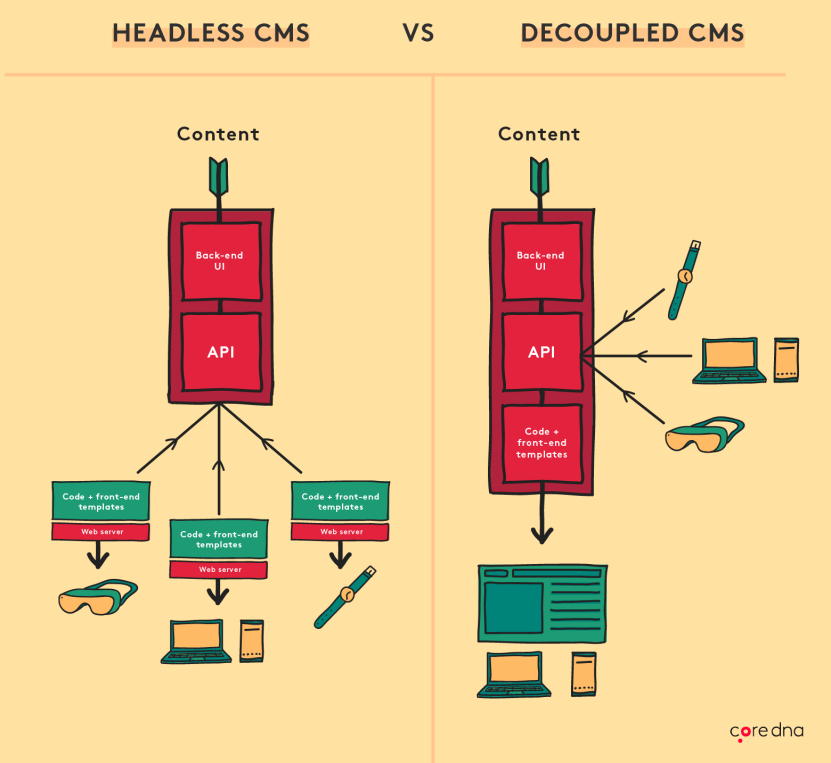
To define a headless CMS, think of the front-end and back-end components of a traditional platform as the “head” and “body” of a CMS platform, respectively. When we decapitate and remove the head from the platform, we end up with a headless CMS.
A headless CMS is front-end agnostic, which means it doesn’t come with a default front-end system to determine how your content is presented to your end-user. It essentially acts as a content repository which stores your content in its raw form.
So how does the content get delivered to your end-user? Well, since there is no default front-end presentation layer, developers are free to develop as many “heads” as they want, enabling brands to distribute content to a multitude of channels including websites, apps, billboards, and smart speakers. The content is distributed to each channel through API calls.
Most headless platforms are 100% API driven, which why they’re suitable for delivering data and content to pretty much anywhere.