How headless architecture is changing the world of the framework
Headless architecture decouples the front-end presentation layer from the back-end logic. With the innovation of the headless platform, it would seem that the back-end frameworks are making a comeback.
A headless platform is made up of a series of back-end APIs that make all the admin features accessible to the developers. In this way, developers can now construct UXs based on whatever framework they choose and seamlessly integrate applications into existing systems.
Also, it allows for a consistent approach across multiple channels. The platform can now deliver the same experience across any technology and any device using a consistent approach.
For example, if someone wants to code .NET and build systems on Azure, they use the same API calls to a REST API or a GraphQL as a front-end developer using Vue JS. They then process that information in any infrastructure subsystem, any application they want, and then deliver it to a presentation layer, using whatever framework they want.
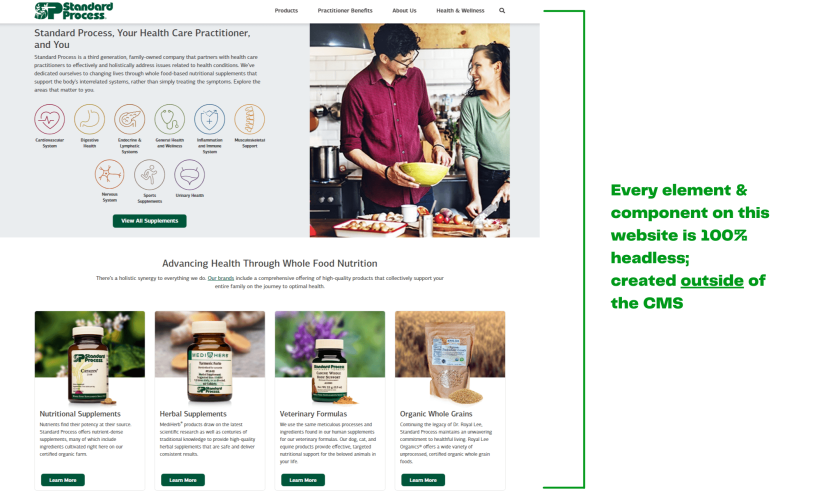
For example, one of our clients, Standard Process has a website that is 100% headless. This headless approach enables agency developers to create web applications outside of the CMS that can read, search, manipulate, write, update and delete that content from that external system, no matter which external system they use.
With Core dna’s APIs they can access all Core dna features from outside the platform, enabling them to create new components, edit a post, delete an input type and more all externally.
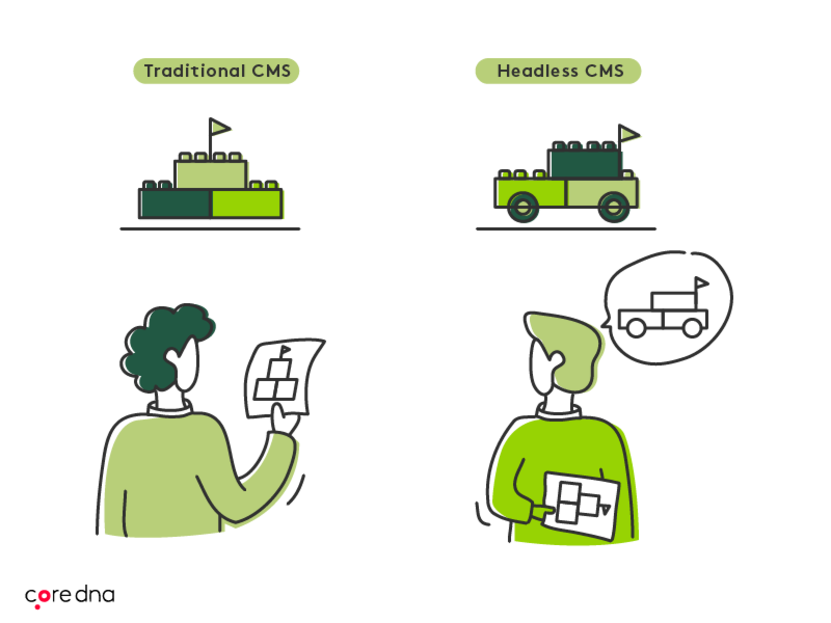
Essentially, headless allows you to transport all of the features of your CMS into your own technology stack. Thinking of it in terms of Lego, the marketer is able to create a set of structures from the Lego blocks that can be incorporated into any other Lego project without the need to customize.