Course Content
M1: A $200 Billion Wake-Up Call
large parts of Texas, Florida and Georgia are still recovering from the effects of two hurricanes. Millions of people and businesses remain without electricity, phone service or even access to clean water. Some of these services will take months to restore.
0/5
M3: One Platform vs a Mix of Best-­in-Breed Technologies: What’s The Best For Your Business?
Many of the decisions being made about what to use are less about technology itself, but rather about the way that companies engage with that technology.
0/3
M5: Using WordPress as an Enterprise CMS: 9 Things You Should Know
WordPress is the most popular Content Management System (CMS) in the world, powering roughly 29 percent of all active websites. Yikes. With numbers like those, it’s no surprise that WordPress crosses the minds of those who are choosing a CMS.
0/8
M6: How to Choose a SaaS CMS: The 9-Point Checklist
Choosing a Content Management System (CMS) is a gigantic decision. The bigger your brand, the more people will rely on your CMS to provide great backend and frontend experiences.
0/6
M7: 6 Reasons To Ditch Drupal
If you’re still using Drupal 6 as your CMS, then your time is running out. Recently, the company officially announced that the platform was reaching its EOL or ‘End Of Life’, and that loyal users would be forced to upgrade to Drupal 7 or 8.
0/1
M8: How to Choose the Best CMS for Mobile Apps
With a multitude of potential CMS suitors on the market, how should you go about choosing the best one for mobile applications?
0/4
M9: The Web is Broken: And The CMSs Broke It
Having a CMS sounded so nice at first. It ensured that you wouldn’t be locked out of your own website, and you’ll be able to make changes whenever you need to. However, when all the developers started arguing about which language and framework should be used to build the website and system, you knew something might be wrong.
0/6
M10: Top 3 IoT Challenges: Data, Data and Data
CMSWire’s David Roe recently published an excellent piece on the problems with IoT devices. He mentioned security and user privacy, but I couldn’t help but expand on the problems relating to data. As far as I’m concerned, the top three issues with the IoT era are all data-based.
0/4
M11: Tools for choosing the right CMS
Making the right choice in CMS platform for your business is harder than you think. In fact, choosing a new content management platform for your web assets has never been so hard. The wrong decision in this case can have a lasting impact on your digital initiative for years and cost considerable cash and time to rectify.
0/10
M13: Multi-Site Management Strategies That Actually Work
Multi-site management promises a great deal, from new market penetration to scaling your business to a global audience. There a reason the world’s largest brands open new offices and physical stores when they enter new markets.
0/5
M14: GDPR/POPI Explained In 5 Minutes: Everything You Need to Know
GDPR stands for General Data Protection Regulation. It’s a game-changing data privacy law set out by the EU
0/6
M15: GDPR Preparation: 7 Questions To Ask Your CMS Vendor
With General Data Protection Regulation (GDPR) rolling out in just a few short months, you need to make sure every relevant aspect of your business is GDPR compliant.
0/4
M17: Hybrid CMS: A Headless platform, But With a Front-End
By 2020, experts forecast that the world will be host to over 20 billion IoT devices, from smart speakers to smart wearables and everything — and I really do mean everything — in between.
0/8
M18: Intranet CMS: A Guide to Choosing Intranet Software
Almost every company has an intranet — even the companies that claim otherwise. It may not be a unified system, but an internal, private network will certainly exist in some shape or form, usually patched together by the likes of Gmail, Google Drive, Slack, and Hubspot.
0/7
M19: Cloud CMS: 8-Point Checklist For Choosing a Cloud CMS (And Hidden Gotchas You Need To Know)
The past year changes in the IT sector have made the cloud become real. Cloud computing is becoming an essential tool for businesses of all sizes and budgets, but there are some basic requirements that should be considered before choosing a cloud CMS platform.
0/6
M20: Content Optimization: What It Is and How To Do It
Seeing that initial traffic spike post-content launch is awesome, but things start to get really depressing when it flattens out. Which is why content optimization is critical.
0/6
M21: Drupal as a CMS and Commerce Platform: The Ultimate Guide
The three main players in the traditional, monolithic CMS space are WordPress (which accounts for 27+ million live sites), Joomla (1.8 million), and Drupal (630,000.)
0/5
M22: What Is A Digital Experience Platform? DXP vs CMS Explained
The web content management space is no stranger to acronyms. In fact, whenever a new acronym emerges, there’s a temptation to label it as just another fading buzzword and ignore it completely.
0/5
M23: Custom CMS & Backend Frameworks Be Damned
We’ve gotten accustomed to the ease of use and functionality provided by the modern CMS. With so many CMS platforms on the market, it’s important to understand what CMS is right for your business. It’s also important not to neglect the organisational impact of a new CMS.
0/9
M24: Decoupled CMS Explained: Pros and Cons
In today’s multi-channel environment, where content is consumed across various digital touchpoints, the legacy or monolithic CMS is no longer the only option. Instead, we’ve seen terms like headless CMS, decoupled CMS, agile CMS, hybrid CMS and more thrown around as new CMS architectures continue to be designed, leaving companies spoilt for choice.
0/6
M26: You Just Became The Head of Marketing. What Now?
Congratulations. You’ve just landed the role you’ve been long searching for. You're now heading up a marketing team and have earned the title. You have seen first hand that being a senior marketer is no job for the faint-hearted.
0/11
M27: 5 Proven Tactics To Building & Growing an Email List From Scratch
Those early days when you know you’re doing everything right, but NO ONE is signing up to your email list. Okay, maybe a few people are signing up…like maybe five people a week. A blip on the radar for the kind of business you want to build. At that rate, it is going to take you around 4 years to get to 1,000 subscribers.
0/7
M28: eCommerce CMS: 32 Must-Have CMS Features (& Why Most Commerce Platforms Aren’t Good CMS)
When you start looking into eCommerce platforms to grow your online store, you'll be immediately greeted by countless platforms touting their accessibility and vying for your business.
0/3
M29: Do You Know The True Cost of Managing a Website?
You have heard the idiom about the tip of the iceberg. But have you given a second thought to what this actually means? Embarking on a website redevelopment is a pretty good example of the analogy. There’s a reason why a website redevelopment is in equal parts exciting and harrowing.
0/5
M30: 8 Types of eCommerce Customer Pain Points (And How to Relieve Them)
When we are in physical pain, we can visit a doctor. When we have perceived unmet needs, we usually end up buying products. Those unmet needs are our pain points. As an online store owner, you are your customers’ doctor. Your eCommerce store is the hospital. Your staff are the nurses and orderlies.
0/6
M31: Searchable Websites: Best Practices in Search to Drive Website Conversions
If you have ever typed in a search bar on a website for a product you are looking for, you are already familiar with site search. Site search is a feature on websites that enables users to search for specific content. It's quite a handy feature found in many different places, such as Amazon, Reddit, and many popular eCommerce websites.
0/10
M32: Business Must Evolve to Become More Resilient
Resilience – the ability to recover quickly from illness or misfortune – is a valuable attribute for both individuals and organizations.
0/4
M35: Going Global with a Headless CMS Multi-Language Site
In the world of digital marketing, there is no denying the importance of having a multilingual site. This is especially true for eCommerce businesses that want to expand their reach and visibility to new markets. Not only will a multilingual site help you with internationalization and expanding the audience you market to, but it will also help you earn new customers. A multilingual site delivers a far more personalized experience to the end visitor if it's presented in a language that is native to them.
0/6
eCommerce Content Management Specialist Course

List Building Strategy #1: Side Project Marketing

According to Brian Clark, the golden rule of online marketing is this:


“Give something valuable away in order to sell something related.”


So when you get to a point where blogging and content production take too much time, or buying advertising space kind of works, but you don’t feel like you’re really breaking through the noise of all the online chatter, using a side project to get attention is a great way to grow your brand awareness… and your email subscribers.

Side projects are a product or service that is clearly not your business’ main offering, but is a related and free offer provided to your audience in exchange for their email address.

It might sound like a lot of work at first, but it really doesn’t have to be.

A lot of SaaS companies do this with a freemium version of their offering while those customers gear up and grow to the point that they’re ready to become full-fledged, paying customers. (Think Buffer or MailChimp)

But beyond freemium, you can offer something completely different, too.

Crew, a company that matches companies with high-quality, hand-picked freelancers, can’t exactly offer a freemium version of their service, so they have six different side projects they offer for free in lieu of other marketing or advertising tactics:

Including things like a calculator to help people figure out the cost of an app they want developed,
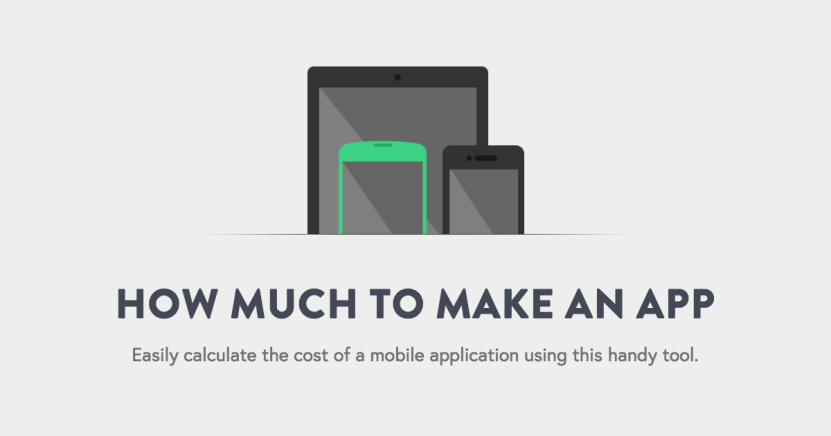
How to Build an Email List From Scratch Tip- How much to make an app

a collection of free stock photos, and a list of what they call ‘unicorn’ coffee shops to work from that have the ultimate trifecta of working perfection: good coffee, good wifi, and plenty of outlet plugs.

You might be thinking, “OMG, we don’t have money and resources to build this”.

Here’s the deal:

Your side product marketing doesn’t have to be expensive or labour intensive. It can be as simple as an excel sheet. 

Take a look at Greenlane Search Marketing‘s side project – Rank Tank. Those DIY tools didn’t cost a fortune to build, but take a look at the number of keywords it’s ranking for:

How to Build an Email List From Scratch - Rank Tank SEMrush data

If that doesn’t convince you how about this stat instead:

62%. 

That’s the percentage of Crew’s revenue driven by their side projects – How Much Does a Website Cost – a week following its launch on Product Hunt.

Here’s what Ali Mese of Growth Supply had to say on finding side project ideas….

“1. Catch key decision breakpoints — (X vs Y): Core product variations, core product substitutes, your competitors, and related benefits

2. Help your customers get better at what they do: Take a step back and think about all of the ways your customer measures success, not just the one you are directly trying to provide.

3. Do the legwork: Find ways to help them work smarter and break through the constraints they’re currently facing

4. Free tools for lead generation: Offer one or few features of your core product as a standalone product and give it away for free, build a tool that solves ‘microproblems’, build a tool around things that stop your customers from buying your product”

[via Medium]