What business can learn from Twitter, Facebook, and Instagram
One of the amazing things about both Harvey and Irma was that, while homes and businesses flooded, roads became impassable, and the power went out, mobile phones and networks continued to work. Twitter, Facebook, and other social networks gave us a frontline view of the tragedy as it unfolded in real-time.
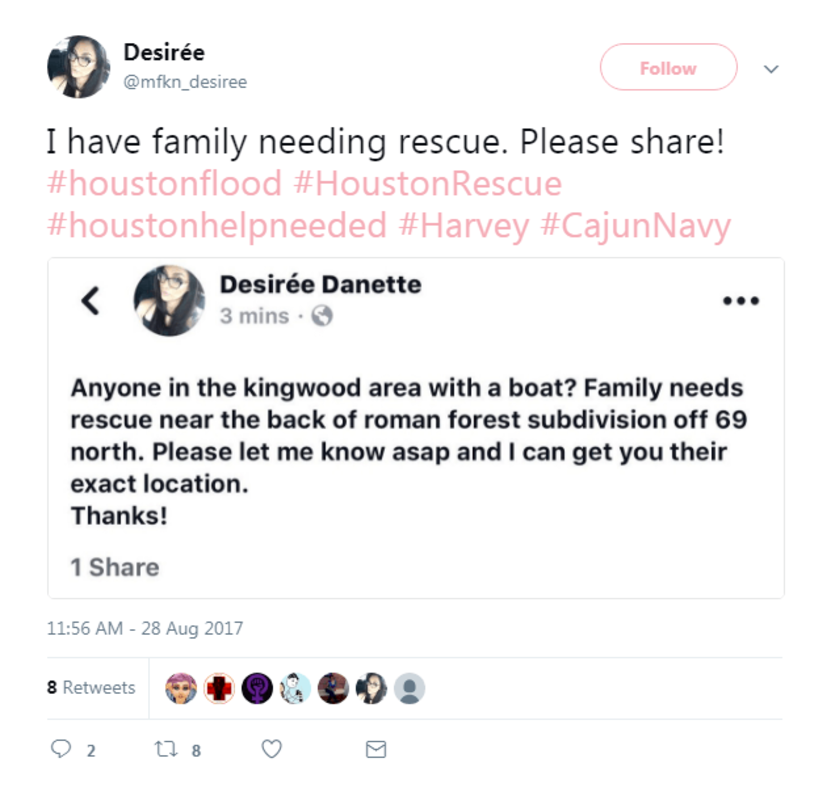
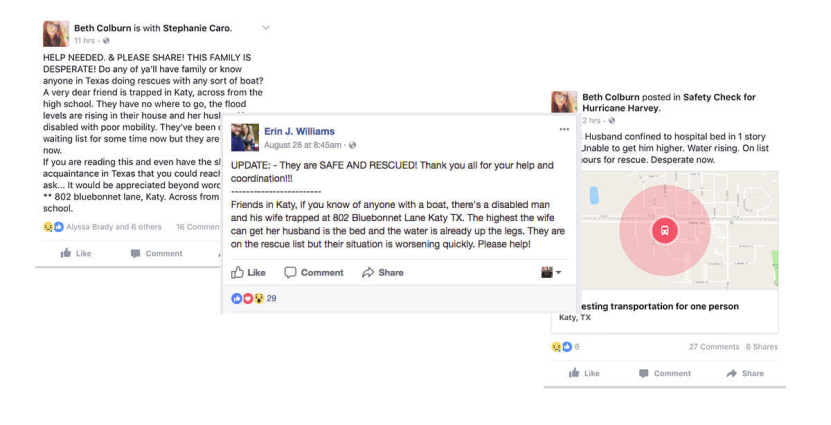
In many places, even the 911 emergency networks became inoperable or simply overloaded and people turned to their smartphones and social media to summon help. Ironically, while businesses couldn’t access critical systems, people in boats were able to update their Facebook and share pictures on Instagram.
 f
f
That is because those systems, all running in the cloud, are often more resilient.
Even if a local data center goes down, others simply take over and keep the system running. Businesses who had their critical applications running in the cloud – as many increasingly are – saw far less disruption.
SaaS-based (Software as a Service) solutions like SalesForce, SAP S/4 HANA, and a growing number of content management (CMS), digital experience platforms (DXP), and more will take local or regional outages in stride.
They simply shift to other data centers to pick up the slack – a process known as load balancing or failover – to ensure maximum uptime for business-critical applications. Sure, businesses hosting their own systems could achieve the same level of resilience by operating multiple, redundant data centers in different locations, but this is often too costly and complex unless shared by others.