How gated content can be dangerous (when to avoid gated content)
There’s a time and place for everything, and gating content is no different.
Like building a delicate tower of cards, the wrong move at the wrong time can undermine all your hard work. Gate your content incorrectly, and you’ll innocently sabotage your lead generation.
Instead of attracting leads, you’ll be repelling them, rapidly.
That’s why you should avoid gating content if the following apply to you…
When to NOT gate your content #1: You don’t have a solid customer persona
“With personas, businesses can be more strategic in catering to each audience, internalize the customer that they are trying to attract, and relate to them as human beings.” (Krux marketing team)
Research from the Edelman group shows that brands and business are failing to grasp the most basic motivations, objections, and desires of customers. Their consumer marketing survey – which questioned over 11,000 people in over 8 different countries – found that 51% of people feel brands are doing a poor job of asking about and fulfilling their needs.
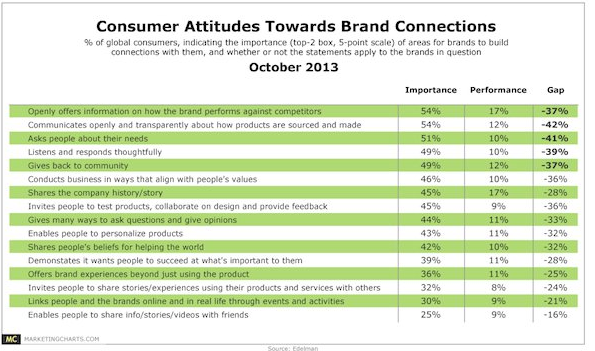
Further research even reveals that 40% of consumers say most promotions don’t deliver anything of interest.
Personas are important: that’s obvious. But as research shows, most businesses are lacking when it comes to creating and using them effectively.
Don’t be one of those businesses.
Make sure you have an accurate picture of your customers’ needs/wants before creating and gating your content. Not only will this save you time, but you’ll shoot up the ROI of your gated content, because you’ll know exactly what they’re looking for, and how – and when – to give it to them.
When to NOT gate your content #2: You don’t have ungated content to “Back you up”
So you’ve created a kick-ass piece of content ready to be gated. You’re certain that your leads will benefit. In fact, they’d be silly not to opt-in. The info you’re offering isn’t available anywhere else online…
Time to start reeling in those leads, right?
Not so fast…
Remember, your pre-gated content will heavily influence your lead’s perception of your gated content. It acts as confirmation that you actually know what you’re talking about and can deliver something valuable. So be sure to have enough pre-gated content to back your gated content.
When to NOT gate your content #3: You’re offering “Surface level” content to the surface of your funnel
Things like blog posts and basic videos should not be gated if your goal is higher traffic and stronger SEO.
Also, content that is meant to raise awareness or answer basic product questions must be ungated as well. Early in the sales funnel, people need to understand what the “thing” is and how it benefits them.
Therefore, gating content at this stage creates a premature sense of tension and distrust. A grave mistake is hiding information like (basic) case studies, FAQs, and product specifications behind gates. They do not belong there.
When to NOT gate your content #4: You’re asking for too much at such a low commitment stage
People at the beginning of the funnel have lower commitment. They’re more likely to abandon forms than those who are deeper in the funnel. For better ROI at earlier stages, emphasize transparency, use social proof, and – as mentioned above- use pre-gated content to persuade.
When to NOT gate your content #5: You haven’t ‘program-matized’ the follow-up and nurture phase
If you don’t have an automation follow up the system, gating is a bad idea. You’ll be wasting resources by converting leads and letting them fizzle out, without making a single sale.
Make sure you have the following set up:
- Automated email series: You need constant content to keep the relationship alive
- Tracking and testing measures: You need to be able to constantly optimize
- Triggered communications: This will allow you to automatically deliver tailored messages to warm, hot, and cold leads.