[Chatbot fail #1] Misaligned messaging
Your chatbot says a lot about your brand, literally.
If you’re in the business of selling children’s toys, your chatbot needs to reflect the tone and personality of your brand, which should be casual and bubbly. But that same causal approach won’t wash so well if you’re in the B2B aviation industry.
Putting tone to one side, chatbots also need to deliver clear, concise, and conversational responses. The best way to keep a user engaged is to keep the chatbot’s messages short, simple, and to the point. While this approach may preclude a chatbot from accomplishing more sophisticated tasks, the emphasis on delivering simple and direct answers will make the process easier for both chatbot developers and the users who engage with them. Both sides are often better served by having the chatbot accomplish a few simple tasks flawlessly, rather than attempting to do too much and failing miserably.
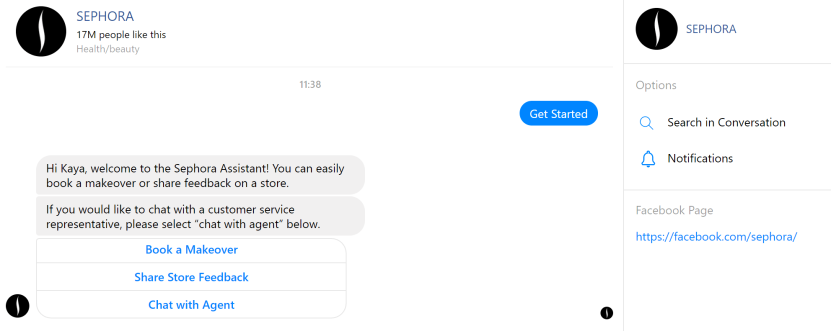
An example to follow: Sephora’s on-brand chatbot customer experience
Sephora’s chatbot is a good example to note. They’re a professional makeup brand, and you get that feeling when you talk to their bot. It greets you formally and then cuts to the chase by giving you three options to move you in the right direction (book a makeover, share feedback or talk to an agent). As you will come to see in the other chatbot experience examples we have lined up, this strategy isn’t always the case. In fact, Sephora has deliberately avoided emojis and whacky GIFs in order to stay on brand.