What to do instead of competing head-on with Amazon
Amazon might be the all-mighty, but it’s not the end-all-be-all.
While it may take a little longer to get up-and-running with different avenues, it’s a good idea and an investment that will likely prove worth it in the long run.
Here are a few Amazon alternatives at your disposal.
1. Work with niche marketplaces
Yes, Amazon is the most dominant product marketplace.
But it’s far from being the only one.
For example, e-retailer Walls Need Love works with a few niche marketplaces outside of Amazon, including Fancy, Touch of Modern, Wayfair, Etsy, and Urban Outfitters.
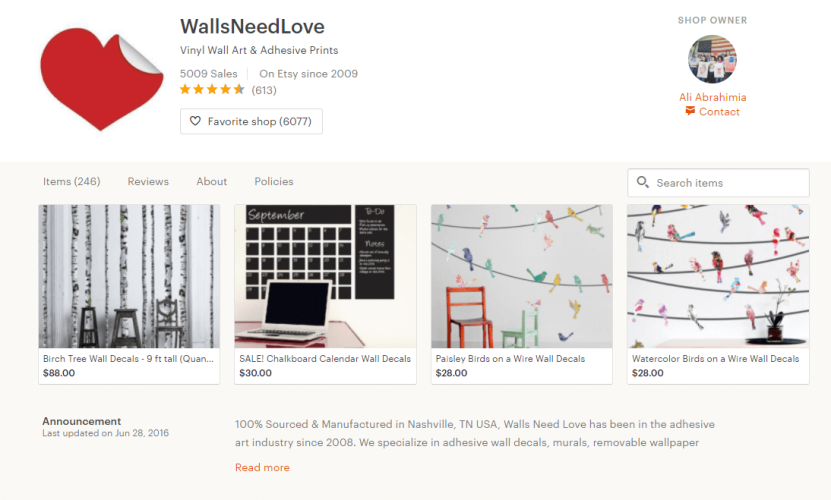
(image source)
As a small company, they can’t afford to get into price wars. So they keep a close eye on both distribution agreements and profit margins before listing with them.
All marketplaces are a necessary evil. They demand discounts and a cut of the profits. But they’re also one of the best (if not, the only) ways to build awareness for new brands in the early stages.
The trick is to diversify your options so a single platform can’t make or break you (like Amazon). And then make sure the terms work for you and that the marketplace represents your brand and image well.
2. Build your own database and list
Spearmint LOVE sells baby clothing. Over the last year, they’ve seen an incredible 991% YoY growth.
And this monumental growth had nothing to do with Amazon.
How did they do that exactly?
They’ve been able to use Facebook and Instagram ads to build a pipeline of leads to sell directly to the end-user.
Spearmint LOVE is able to see an impressively low $5 cost per acquisition because they use a sales funnel.
For example, they use content-based top of the funnel ads to build up attention and interest around their products.

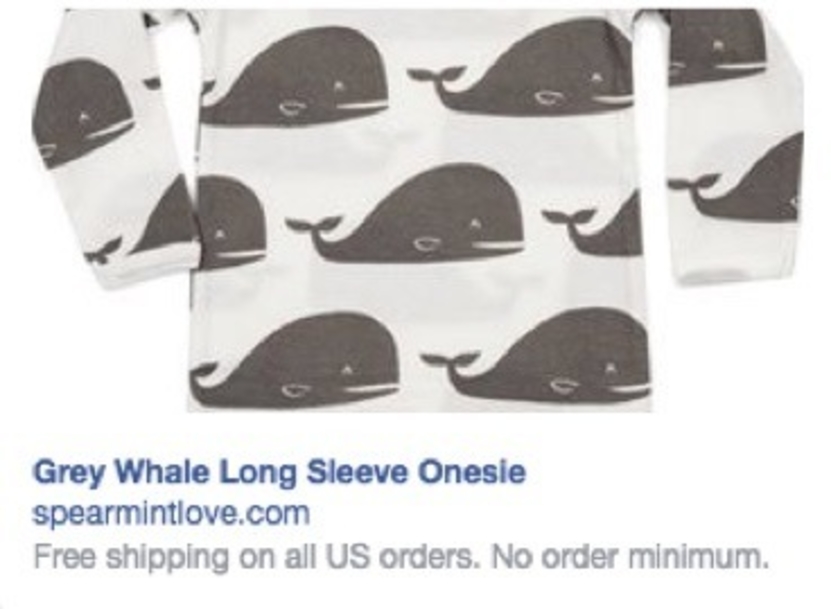
Then, they can use Dynamic Product ads to automatically retarget people who were just on their site. For example, you might check out the Grey Whale Long Sleeve Onesie.
And then a few minutes later, guess what catches your eye back on Facebook:
You can also create lookalike audiences based on your customers. These allow you to find brand new people who share a lot in common with the people who’ve already spent money with you.
Online advertising isn’t a gamble. It works, and it should be an investment.
For example, the more tightly targeted your audience, the lower Cost Per Conversion you should see.
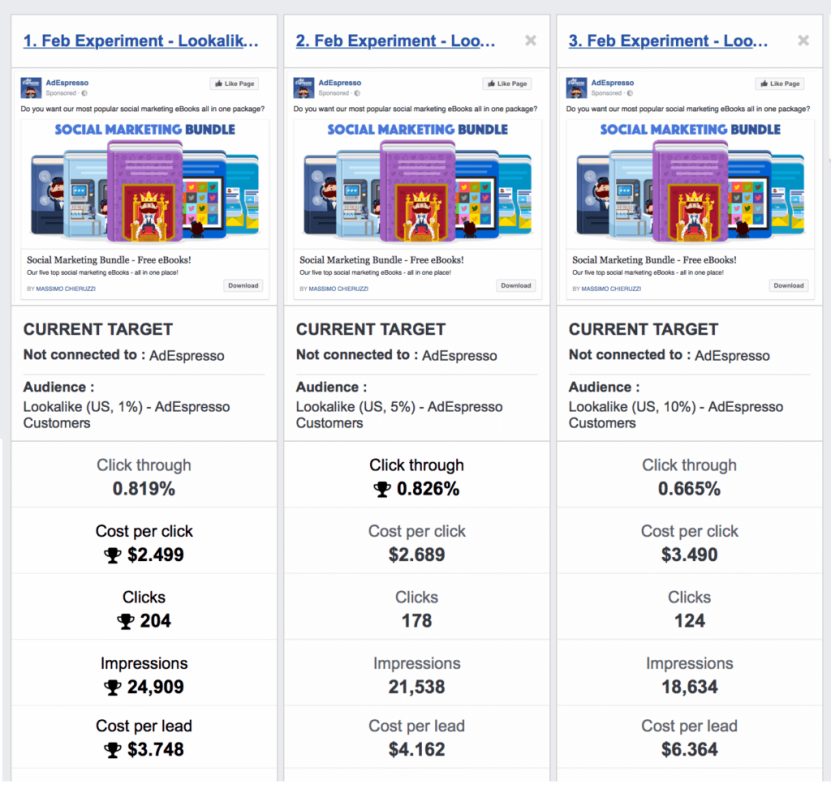 (
(This experiment from AdEspresso shows that a 1% lookalike audience almost cuts the Cost Per Lead in half versus the 10% lookalike audience.
Now, imagine how that compares to an untargeted, random audience people usually go after.
3. Give people a reason to shop with you personally
There’s a good reason people shop on Amazon most of the time.
The products are usually among the cheapest, the shipping is among the fastest, and the returns are among the safest.
So why would you, the consumer, shop anywhere else?!
That’s the hard question to answer. How can you give people a better reason to shop through your site instead of a marketplace?
The easy answer is to promote exclusive offers, warranty deals, unique color variations, and more.
You could try looking at what the competition is doing. But that type of copy-cat mentality doesn’t always work out well in the end. What works for them doesn’t mean it will work for you.
Another trick is to look at how different companies in other industries are tackling similar problems.
For example, many of the same issues plague the travel industry. Aggregators like Expedia take a huge cut off the top.
Here’s how the Bellagio in Las Vegas responds.
First, they offer to not just price match, but also give you a further discount if a third-party site lists their rooms for cheaper:
“We promise that if you find a lower third-party room rate within 24 hours of booking on our website, we will not only match that rate, but give you an additional 10% off the lower rate.”
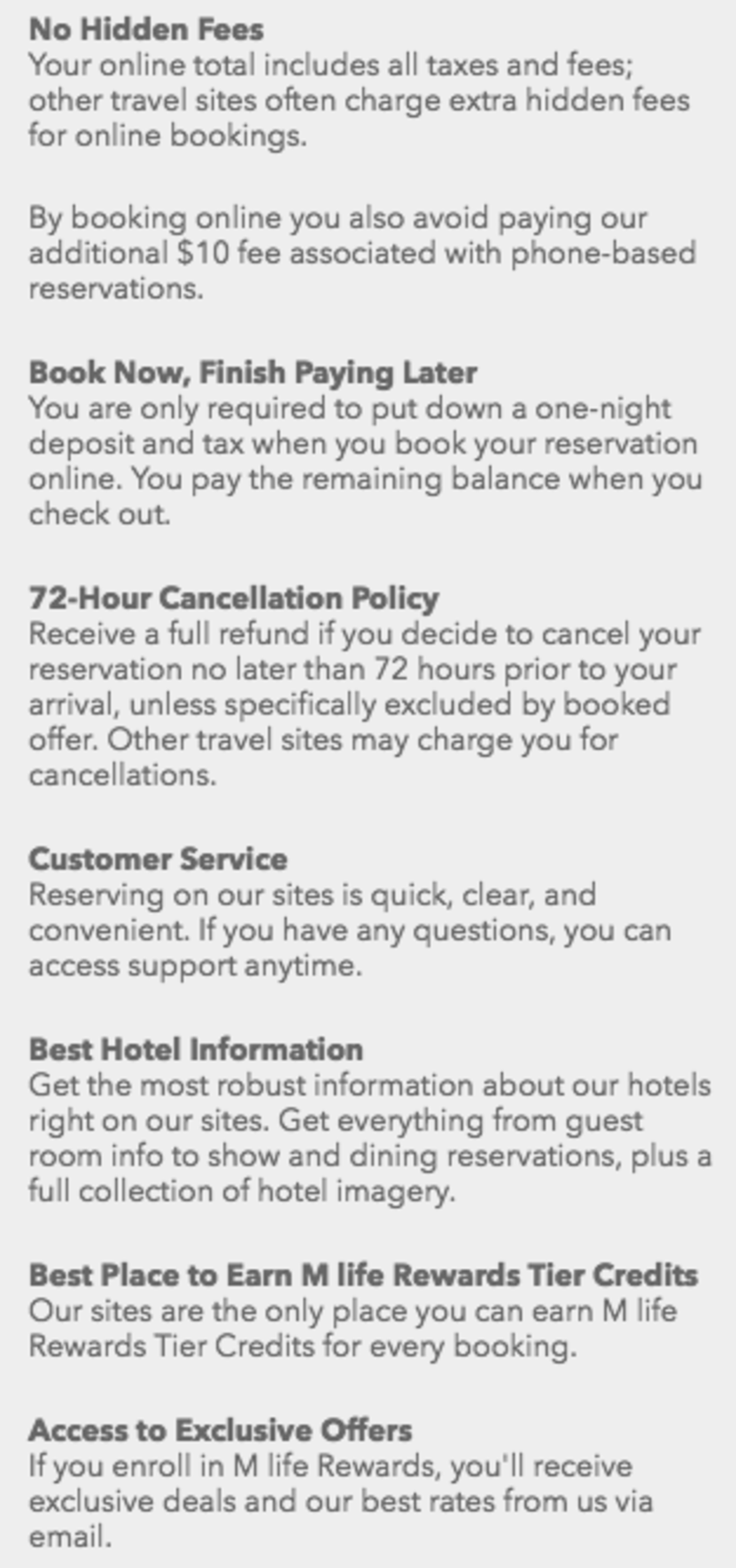
They don’t stop there, though. They also list out a few additional reasons like no hidden fees, better payment terms (book now, pay later), longer cancellation policies, and other exclusive offers.
Hotels commonly use reward points that customers can exchange for bigger rooms, upgraded service, etc. Except, they won’t give out points for people who book through third-party sites.
So in the first instance, they’re rewarding you with extras. And then in the second, they’re taking things away if you don’t book directly through them. They’ve gone to great lengths to hand out benefits you can’t get anywhere else, eliminating the need for you to book through another marketplace or site.
The other added bonus is that they own the entire experience. They’re able to make sure the customer has a positive, consistent experience from beginning to end. This is what omnichannel marketing is all about – a seamless and consistent experience across channels.
Working with partners and other marketplaces – like Expedia, Booking.com, or Amazon – forces you to turn a lot of this control over and hope for the best. Amazon, for example, doesn’t (generally) allow their merchants to “own” the packaging. Do you have a unique product packaging or unboxing experience that is a part of your brand? Yeah, you can’t really do that with Amazon.
4. Restrict products on a competitive marketplace platform
Amazon is excellent for providing quick feedback. It’s kind of like Google AdWords in that sense because you can get almost instant direction on what’s working (or not working).
In comparison, waiting for the SEO ball to get rolling takes forever. That’s why selling directly through your site in the early days often doesn’t pay off.
So you can use Amazon and other competitive marketplace platforms for a quick test bed for new products. Then, you can also try using a hard minimum advertised price (MAP) to control how other sites price your goods.
For example, you can institute a price “floor” so that no matter what happens, your margins will stick within a generally-accepted range. That way, pricing should be consistent across different customer touch-points so some won’t feel cheated if it pops up for less somewhere else.
But more importantly, it helps you hold margins firm.
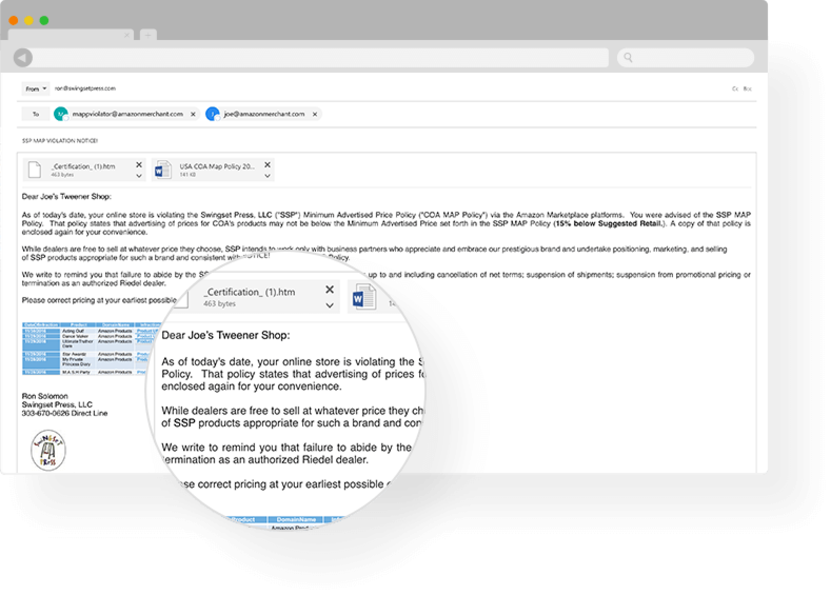
The problem, of course, is holding sites and other retailers accountable. If you tell them shipments will stop if they drop pricing below a certain point, you need to be willing and able to act on that promise.
Ready-made software like TrackStreet and Mapp Trap can help monitor this for you.
Both will aggregate data from different sites and marketplaces to tell you exactly what people are charging across the ‘net’.
They even feature an enforcement email service to make sure all parties are complying. It can help you automatically fire-off a consistent sequence of messages that range from policy notices to legal actions.